


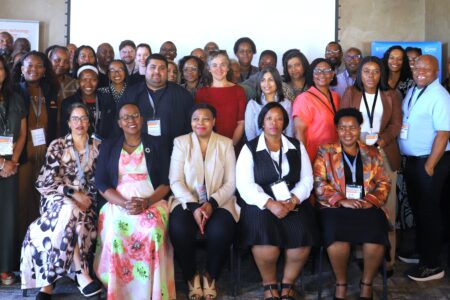

South Africa’s fight against food loss and waste: Reflections from a June 2026 national multi-stakeholder dialogue
While millions of South Africans face food insecurity, tonnes of edible food continue to be discarded every day, often ending up in landfills. Insights from a national food loss and waste workshop reveal why changing consumer behaviour, strengthening partnerships and keeping organic waste out of landfills must become national priorities and core components in the… View Article

Read more

Small-scale food actors are key to poverty alleviation and food security: They should be enabled and consulted, not criminalised

Read more

Spatial Insights Edition 21 | Where are tourists entering South Africa and how are these gateways changing?

Read more

HSRC NEWS

HSRC CURRENT PROJECTS

Social Science that makes a difference

With a service record of more than 50 years, the Human Sciences Research Council (HSRC) is the largest dedicated research institute in Africa focusing on the social sciences and humanities.

What we do

Our Divisions & Units

Our work finds expression through the following divisions and units:

Centre
Research Impact Division (RID)

Read more

Division
Developmental, Capable and Ethical State (DCES)

Read more

Division
Public Health, Societies and Belonging (PHSB)

Read more

Division
Equitable Education and Economies (EEE)

Read more

Division
Centre for Science in Society (CSIS)

Read more

Division
Centre for Science, Technology and Innovation Indicators (CeSTII)

Read more

PRESS RELEASES

Research Data

The HSRC Research Data Service provides a digital repository of the HSRC's research data in support of evidence-based human and social development.

View Research Data

HSRC Repository

The HSRC Institutional Repository is an important tool that the HSRC utilises to preserve and disseminate its documents. Different types of publications including scholarly research outputs are collected, preserved and distributed in a digital format.

View HSRC Repository

Our Impact

Research funders are increasingly asking about real measurable benefits – which requires impact assessments of the interventions, programmes, projects and policies that emerge from funded research. There is thus increasing demand for monitoring, measurement, analysis, and reporting on impact.